
Many athletes and active people don't need a cupboard full of supplements to perform well. Supplements sit right at the top of the performance nutrition pyramid, and no supplement can make up for not eating enough. Get the foundations right first, then ask whether a supplement genuinely adds anything.
Supplements are one of the things I get asked about most. Which creatine is best? Should I be taking magnesium? Is this pre-workout worth it? And more often than not, the conversation ends up somewhere completely different: is this person actually eating enough to support their training?
That's exactly why I made this graphic.
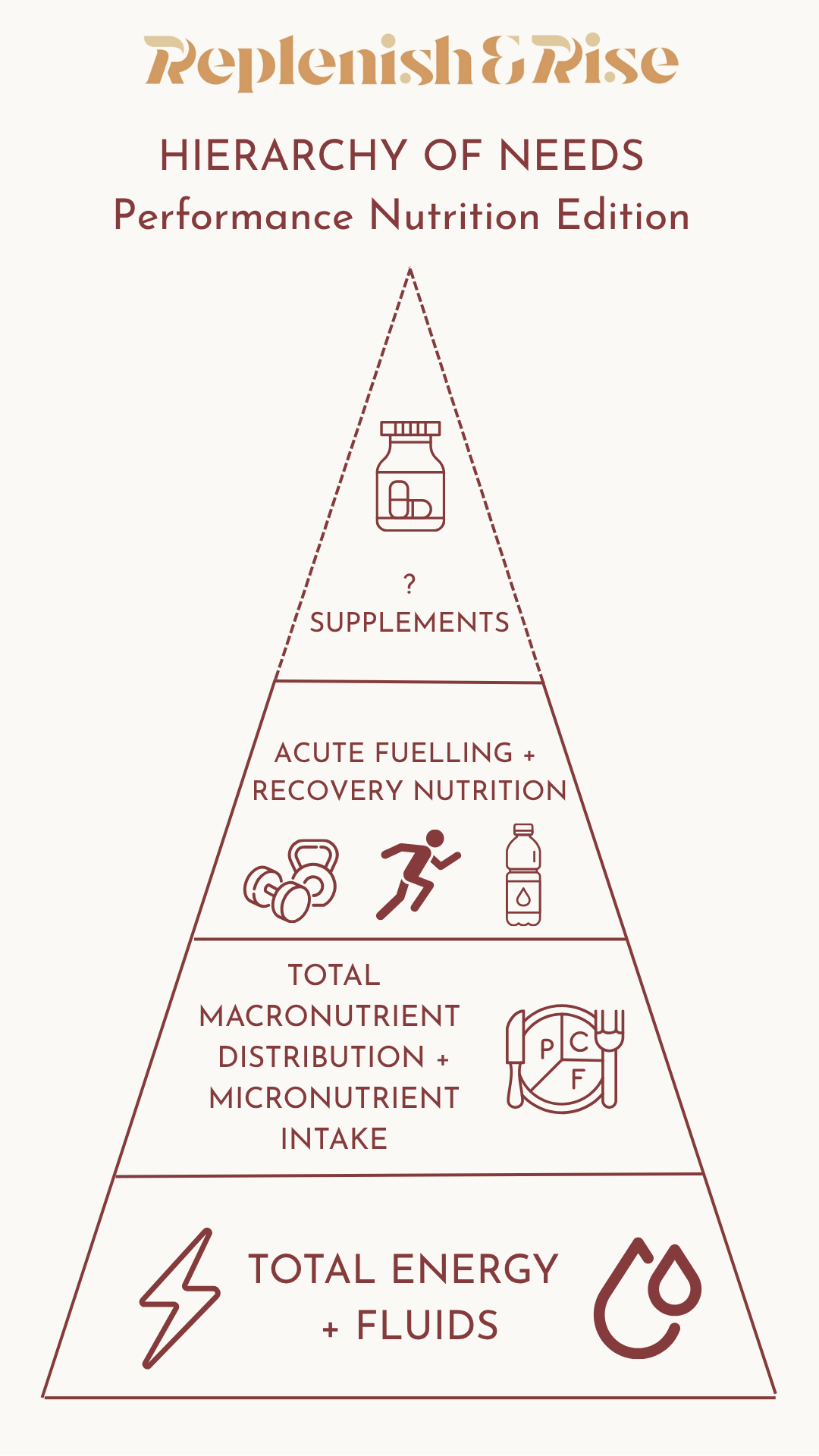
What is the performance nutrition hierarchy of needs?
The idea is simple: build from the bottom up. Each layer only really works if the one underneath it is solid.
1. Total energy + fluids. Eating enough overall to cover your training and health, and staying hydrated. Day to day, that means meeting your energy needs, regular meals and snacks, not skipping food on busy days, and drinking enough across the day.
2. Total macronutrient distribution and micronutrient intake. Getting enough carbohydrate, protein, fat, vitamins and minerals to match your exercise and health. For athletes and active individuals, this is likely to look like meals based on starchy carbohydrates, protein spread across the day, some fats, and meeting your five-a-day. Vitamin D supplements belong here rather than at the top, because they’re about meeting a health need, not boosting performance.
3. Acute fuelling + recovery. What you eat and drink around your sessions: something to fuel before training, then refuelling and rehydrating afterwards.
4. Supplements. Products that might add a small extra benefit in specific situations. Only worth considering when there's a clear reason, and only once the layers below are in place.
You'll notice the top of the pyramid is dotted, with a question mark. This is because some people may not even need supplements, and a food-first approach is most appropriate.
Why is energy the foundation?
Everything your body does runs on energy: training, recovery, hormone production, bone health, your immune system, your mood. When there isn't enough to go round, your body starts cutting back on the things it sees as non-essential.
Over time, not eating enough for your training can lead to low energy availability. If this continues, it can develop into Relative Energy Deficiency in Sport (RED-S). Signs can include recurring injuries, frequent illness, disrupted or missing periods, poor sleep, low mood and performance that plateaus.
Fluids sit in this layer too, and they matter for much more than your training. Losing as little as 2% of your body weight in fluid may affect your exercise performance. Away from training, staying hydrated helps with your fluid balance, concentration and digestion.
Can supplements fix under-fuelling?
No, and this is the bit I really want to emphasise.
If you’re not eating enough, supplements are unlikely to make a meaningful difference to tiredness, bone health, hormonal function or training plateaus. Fuelling yourself adequately will.
I often see people spending a lot of money (and headspace) on the top of the pyramid while the base is crumbling.
Do I actually need supplements?
I would split my response here into two categories: supplements for health and supplements for performance.
For health:
Vitamin D: in the UK, everyone is advised to consider taking a daily 10 microgram vitamin D supplement during autumn and winter (roughly October to March). Some people are advised to consider taking it all year round. This includes people who aren’t often outdoors, usually cover most of their skin when outside, or have darker skin (for example, from an African, African-Caribbean or south Asian background).
If recommended by a healthcare professional: under some circumstances, healthcare professionals may recommend certain vitamin or mineral supplements. For example, if you have a specific deficiency, or you are following a diet that excludes certain foods, for example because of an allergy or a vegan diet.
For performance:
A small number of supplements, such as caffeine and creatine, have good evidence for improving performance in specific situations. Many others have limited or mixed evidence, and some aren’t worth the money. Whether any are right for you depends on your sport, your goals and your health.
Before you buy anything, ask yourself:
Have I got the bottom three layers sorted?
Is there a specific reason I need this?
Is there good evidence it works?
Is it safe? If you're a tested athlete, is it batch-tested (e.g. Informed Sport)? And this reduces, but doesn’t remove, the risk.
If the answer to the first question is "not really", that's where your time and money will make the biggest difference.
The bottom line
Supplements are the cherry on top, not the cake. Fuel yourself well, consistently, and the rest of the pyramid has something to stand on. For a lot of people, that's all they need.
If you're unsure whether you're eating enough for your training, or you'd like an honest, individual take on whether a supplement is worth it for you, I'd love to help.
Disclaimer: This blog is for general education for athletes and active people. It isn’t a substitute for individual advice from a qualified healthcare professional. Always speak to your GP, pharmacist or a registered dietitian before starting any supplement, especially if you take any medications, have a medical condition, or are pregnant or breastfeeding.